Riposte
Balestra's Fourth Edition


Welcome to the Fourth Edition of Balestra! It’s officially been one year of Balestra Magazine and we’re incredibly excited to keep bringing you some of the best contemporary art the world has to offer. Over this past year we’ve featured dozens of established and emerging artists who have had their work read hundreds of times by readers across the world. This fourth edition features incredible poetry, short prose, and visual art that explore themes of identity, language, and things gone by.
The artists for this edition are Amanda Andrews, a Canadian poet writing about the feminine condition and the weight of identity; Lefcothea Maria Golgaki (Λευκοθέα Μαρία Γκολγκακη), A Greek author, scriptwriter, and playwright bringing us a poem with the weight of centuries; Mark Antokas, an author exploring lost love and morbid curiosity; A.M. Francoz, and emerging poet who’s work is heavy with tragedy and the lingering weight of loss; Terry Trowbridge, a prolific and potent poet offering a beautiful desert vignette; Zahra Zoghi, an Iranian artist blending traditional techniques with an abstract vision of “stillness, longing, and the emotional spaces between nature and memory”; Yuan Changming, a poet blending Chinese and English to find the art in overlapping languages; Claudia Wysocky, a young Polish poet and writer bringing Balestra a vulnerable look into her own life; Maxwell O’Toole, a poet who’s work forms an extended metaphoric metaphor; K.m. Lee, a returning contributor who’s work walks the thin lines where trauma and love overlap; Alice Baburek, an emerging voice exploring the endless moments between life and death; Bill Wolak, a poet and visual artist who’s works tread the needle between eldritch terror and comforting warmth; Marina Kuzmić Laszlo, a writer, translator, and editor from Croatia who’s poetry moves from the comfort of an old home to the horror of creeping disease; and Cameron Sauder, a Canadian writer and poet who’s work dives into identity, dreams, and desire.
We encourage you to comment your thoughts, share your favourite pieces, subscribe for more, and most importantly, enjoy!
Amanda Andrews
Amanda is an author, poet and artist, graduating from Brock university with a degree in creative writing and philosophy. She's been featured in an array of poetry collections including but not limited to Cosmic Daffodil, Blood +Honey, Wildscapes lit, Phylum Press, the Song's of the Phoenix anthology collection. When she's not working on novels, you can be sure to find her scribbling poems down in her notebook. She enjoys writing either "a little too close to home" poetry and poetry that tetters between fun and experimental.
Tourist
Blinded by the beauty held between the fingers of day
I never stopped to consider how that grasp tightened at dusk
and so, whistling I went,
with ignorant eyes forever looking back
and when my name was called from so close
                                                                             so far

it was already too late
A heading
                  A warning
carried by a chilly breeze that ought to be out of place
within sunny summer nights
my body torn towards the whistling that ricocheted between trunks
and maybe I should have looked forward as my name

                                                                                            whispered against my mouth
                                                                                                 screamed into my ear

The beech will not protect you
The sugar maples look away
The birch’s peace is riddled with blotch

I was a tourist to a forest holding secrets
that warned me to stay away and yet,
all I could do was walk backwards

                                                                   into the dangers compared to bears.
Will you outwait my anticipation?
My knees press against blades of grass and
left a sting fluttering between shins and ankles.

Will you let me wonder when the clouds will allow
me to feel the tears of my ancestors?

The moon glows against my face as if in greeting (or farewell)
and hot anticipation beats within the rhythm of my heart.

You let the breeze tousle my hair like father once did
And I sigh—allowing the breath of mine to entwine
with the breath of the flames that lick up my legs.

So you wait for me to burn, and I wait with anticipation
for the rage of something that smells like burning flesh and revenge.
If I could turn back time
orange peels are bitter but balance endocarp,
all caterpillars are landbound before learning to grow wings,
moldable plastic still finds itself cracking,
hate and love are so different and yet, both lead to devotion,
I am stuck behind plexiglass and cursed to look back
towards a little girl who cries heavy tears—
and it hurts because she doesn’t know yet that
not all tears are burdens, and not all scars are painful.
Lefcothea Maria Golgaki (Λευκοθέα Μαρία Γκολγκακη)
Lefcothea Maria comes from Greece where she is a published book author, scriptwriter and playwright. Internationally, she has contributed to four poetry collections published by Scars Publications, The Poet, and Adelaide Literary Magazine. Some of her poems, flash fiction stories and essays have been featured in Bright Flash Literary Review, Flash Fiction North, The Penwood Review, Uppagus, Litbreak Magazine, Quail Bell Magazine, Brazen Head, The Daphne Review, The Stray Branch, Aphelion, Eskimo Pie, Mediterranean Poetry, Twist & Twain, Academy of the Heart and Mind, The Sentinel and Tri-Town Tribune.
The Wait
Hundreds of years may pass
until I shake the hook loose.
Creatures of the deep that can’t be owned, scream:
No weight can stay.
The boat stands still and far below
I dive away, unseen.
Mark Antokas
Author Mark Antokas has two published novels on Amazon, “The Odyssey According to Homer, 1967-69,” and, “Another Noel,” as well as two collections of short stories, “You Said We’d Be Friends Forever, and I believed You,” And, “The Nepenthe Collection.” Among other places, he has had short stories published in 5thWallPress(wall#9), ScryofLust, Fleas on the Dog(issue 7, Transmundane Press(On Time), The Chamber Magazine, The Wild Word, Culture Cult, as well as Red Fez, Metastellar, Brilliant Flash Fiction, Wordrunner Chapbooks, Twist and Twain, Balestra Magazine, and Zest of the Lemmon. At the moment, the author is at work on more short stories and flash fiction pieces for publication.
Lost Shoe
She put her sandy, salt encrusted foot on the officer’s desk.
“That’s interesting,” Detective McMurry said. “We don’t normally see one of those so complete. I’ll alert immigration in the capital, Olympia. We’ll hold on to that, if you don’t mind.”
”No, it’s mine. I found it. I brought it in so you could document it.”
“Yes, very good of you. Thank you for your service,” he said in an obligatory tone as he began the report.
Racheal was not from the area. She came from the East Coast after hearing about the bizarre occurrences through the media. She came in curiosity, and, as she imagined, a documentary scholar. Her second novel finished, she finally received her divorce judgement, it was now time to explore other avenues. This time, non-fiction. Something about violence and abuse against women in marriage. And to bare her soul. What writers do. To flush out demons.
It was buried in the sand and washed up on shore. She’d gone back looking for it again, but nothing. Then, after a week, she found it. There it was, one hundred feet from where she’d seen it first, like it had been waiting for her, expectant, sticking out of the sand like a beacon and a waypoint in the desert.
The morning before, in the hotel of a blood red dawn, she opened the twin glass doors to the balcony facing the sea. The flowers were in riot. The air was thick with honey. It was time to witness spring. Grapes were in full leaf, all fruit waited an August harvest.
Trapped between the curtain and the door was a butterfly. Butterflies only have a limited time. She liked butterflies. They struggle to exist. They have a limited time. She jostled the curtains, and the butterfly flew free.
She wondered in her mind, circumspect. Why did she call him that afternoon after finding the foot?
“So, what are we going to do about it?” Why she continued to use the plural with him escaped her. “So,” she corrected, “what am I going to do about it?” It was unusual for her to have contact with him. She was still smarting after a difficult breakup. And why did they break? Because there is no air in space. We cannot breathe water. Butterflies and caterpillars will never talk.
He was surprised at the call. When they first met, her laugh was bubbly. Young, musical, carefree. After the divorce, she found herself forced to leave her newfound independence and apartment in Manhattan. She traveled to California and decided to pull the trigger on her comatose twin brother in the Haight. It was then that her laugh became forced, raw, low and without humor.
“Do about what?” He was English, and was typical of his breed, reserved. He set aside emotions and leaned toward misguided loyalties. She was more spontaneous, was given to emotional outbursts. The British. She came to despise him for his coldness and saw him as a self-anointed arbiter of propriety. And someone who attempted to control her.
“You know what. Don’t be evasive. How can you be so glib about this? It’s a shoe…a tennis shoe that…”
“A trainer, you say. Indeed, curious. That’s interesting.” The British enjoy a good indeed. There again was that distant chill. “No doubt the result of a suicide.”
“Yes, a tennis shoe, but this one is different. With a foot, for crissakes. With a bone sticking out of it. I know this one has a name and a message. You don’t just find a foot washing up in the shore every day. It could be a murder. If you come across a turtle on a fencepost, you can bet it wasn’t an accident.”
“You Americans can be so amusing in your metaphors.”
“It seemed to speak to me…” She glanced at her left hand, and the ring finger where the marriage ring is placed, barren now. Her caustic lawyer said it was the only finger that has a vein directly connected to the heart. The lawyer showed her teeth. She had baggage with men. Racheal let the thought pass, opting for a more thick-skinned approach, an approach he had schooled her in, one that the Brits excel at, one which she knew he preferred. “Why do you always discount my feelings? I want to do something about it.”
“So, someone perished and died in the sea. The harsh marine environment can eat away unexposed skin and bones in no time. You say the shoe is monogrammed? With the initials NW?”
In her research, she found that human feet routinely wash up on the shores of the Salish Sea between Washington State and Vancouver. Modern tennis shoes float, and keep decaying feet in a neat little package, protecting feet from hungry sea creatures. Saltwater preserves.
A writer’s synapses are quick to create possibilities. “It was her. I know it was her. What could she have thought about before death? Why do all dying people see the same thing? The dead they had known, attending them, and escorting them to the afterlife.” She thought about her twin, piss drunk out of his mind, crushed by alcoholism and his own divorce, smashing his head, falling backward in San Francisco, and the death that came soon after his life support was taken away. Her decision, as closest kin.
“Hallucinating, perhaps, but the same thing? I think not. And why do you believe the dead are seeing these same things? Are they still alive when they report seeing these epiphanies?”
“It might be cultural. We have a belief that our ancestors are looking down on us. In stressful times, like dying, that is the first thing you’d think. Look, death is a process, not a moment, okay? Many who didn’t die, and came back to life, talk about meeting the deceased.”
There was silence between the two. A recent history. “You say the initials NW were written on the shoe?” he repeated, as if he was still interested. “The shoe is pink?”
“A woman’s shoe. Yes.” As if to document her art, Racheal said, “Here, a woman who did not make it. Here a foot, as if to walk ashore once more.”
“An American poet. Brilliant! To be sure, you are gifted.”
Not knowing why, she told him about the butterfly.
He commented with perfect English dryness, “Without protective lenses, riding a motorbike, a delicate thing such as a butterfly hitting you in the face at speed, can cause much damage.” He always thought himself clever. Afterwards, he’d stick his tongue into the side of his cheek to signify he’d said something profound, and others should take note. She could see it through the cellphone. Respect a pundit. In the beginning she thought it charming, continental, but later, pathetic. He still wanted her, she knew. Old chickens make great soup.
*
So, you’re sitting naked on that beach off the Pacific Northwest, and a word and a phrase comes to a writer, first as droplets like little unpolished pearls as you watch the undulating sister of the Earth. Waves crash in unending power and hubris, and you think of all the relationships gone awry in the cauldron of your mind and you make note to paper. It is ephemeral, an idea. After, you climb up a craggy path to the only tavern, as simple as a cantina, as elaborate as a hotel, where you go to touch others in social greetings, only to return to that lonely beach, looking for something you cannot ever have or fully describe.
*
When Racheal found the shoe, she quietly sat there, upright in thought, looking at it with its femur bone sticking out of it like an unlikely flagpole. It was then she had an internal conversation with it. It seemed to speak directly to her, without sound, in thought. People said afterwards it was an accidental disappearance. That I slipped overboard. The captain said it in court. In Racheal’s dreamy state, she heard someone, something whisper into her ear. We were so happy together. Why Robert?
She could not shake it, and a few days later she confronted Detective McMurry again, “NW?” She asked the official, “Natalie Wood?”
“New Woman,” McMurry said. “A small upstart shoe manufacturer in Columbia. Went under in 2020. The DNA testing pointed toward a Russian ballerina who dramatically committed suicide, jumped from a bridge after hearing she had Parkinson’s at age 32. I’m sorry.” The officer looked at her, wondering if she believed it. It would be months, years before the real story emerged “Another butterfly gone,” said the detective about the Russian report. “Of course, this is from the Russians. You know the Ruskies.”
Crushed, Racheal checked out of her room soon afterward. Defeated, she had no option other than to believe him. She left without the shoe. She took the coast highway south, to San Francisco, where she would begin her novel about violence and abuse against women in marriage.
Find More Of Mark Work At:
Mark Antokas Amazon Author's Profile
A.M. Francoz
A. M. Francoz is a Canadian poetry and short fiction writer based in St. Catherines. They are currently studying English at Brock University. You can find their work in Songs of the Phoenix, 24 Hour Poetry: Tales of Chaos, and Phylum Press Issue 002: Weeping Moss. Their work consistently focuses on making beautiful the unexamined or taboo. When they aren’t writing, you can find them studying, reading, fencing, or procrastinating all of the above.
The Ë Collection
Ë
I think of Her often
Her smile
Lopsided and genuine
Her arms
Bruised and scarred
Her neck
Choked and coughing
I wonder if she went gently
Into that good night
I know that’s the last thing she would have wanted

Ë
the Ghost
of Her
sits
peacefully
watching
in the back of my mind
wondering
when I will avenge her
when my hands
bloodied
dripping
will emerge victorious
as promised

Ë
I want to avenge you
I want his brain
Splattered on the floor before my feet
I want his heart
Shredded and dripping from my fingers
I want his mind
Tortured and fallen in on itself so far he is forever unrecoverable
I want him
To die by the demons who haunt him
So you can pass on
Knowing I fulfilled the last request you made of me

Ë
A therapist
Long blonde hair
Flowing over her shoulders
A locket dangling from a necklace which rests on her chest
A ring on her finger
She sits in a room
Paintings cover the walls
A water feature on the desk
A zen garden
Which she hates
But she knows her clients love
So she keeps it
Across from her
A soft colourful couch
Full of comfortable pillows
And a more comfortable kid
Hearing exactly
What they needed to hear
From her
This is the woman
He ensured you would never become

Ë
I think
If you had read that poem
When I had known you
You either
Would never have fallen so far
Or killed yourself upon reading the last line.
I know you would have rather died at your own hand
Then have died of his
Even just in my mind
Find More of A.M. Francoz’s Work At:
Phylum Press Issue #002: Phoenix Moss
Terry Trowbridge
Terry Trowbridge’s poems are in Pennsylvania Literary Journal, MasticadoresUSA, Poetry Pacific, Carousel, Lascaux Review, Carmina, untethered, Progenitor, Miracle Monocle, Orbis, Pinhole, Big Windows, Muleskinner, Brittle Star, Mathematical Intelligencer, Journal of Humanistic Mathematics, New Note, Hearth and Coffin, Beatnik Cowboy, Delta Poetry Review, Stick Figure, miniMAG, and 100+ more. His lit crit is in BeZine, Erato, Amsterdam Review, Ariel, British Columbia Review, Hamilton Arts & Letters, Episteme, Studies in Social Justice, Rampike, Seeds, and The /t3mz/ Review. His Erdös number is 5. Terry is grateful to the Ontario Arts Council for his first 2 writing grants.
Trapdoor Spider of the Desert
In reality, the many-kneed legs of Salvador Dali’s camels
are not backlit by sunset crossing the horizon
but instead, are beneath the horizon, hoofbeats, and granular heat.

Arid octopredator with Sarlaac appetite,
serpentine reflexes, foxhole reconnaissance,
tending an intemperate pasture
with clawed shepherd’s crook,
near-blind but for piezo-palpating snare drum sorcery
woven through knotted hinges and glued strings –

Chthonic igloo architect introvert
who builds windowless basements because
solar glare would refract through lamp-baked eyes;
starlight would reflect in freeze-dried eyes;
except for the cratered design, snugly hospitable
for a self-hugging bandy-legged strand puller
swift popper-upper pounce grappler ((((yöu))))

Your milky-poison streaks paint an ebony fang,
dagger-curved paralytic puncture punctuation
double-poked, protrusively pronounced in your voice.

Have a sip dripped from my canteen.

Little hunter in your sandstorm-resistant
version of a wicker hamper with a lid,
(notwithstanding the shock of finding you in a sock),
tonight, my bedroll makes us next door neighbours.
My scent will keep the arachnid-gnawing foxes away,
if you can intercept the scorpions who come near me.
Zahra Zoghi
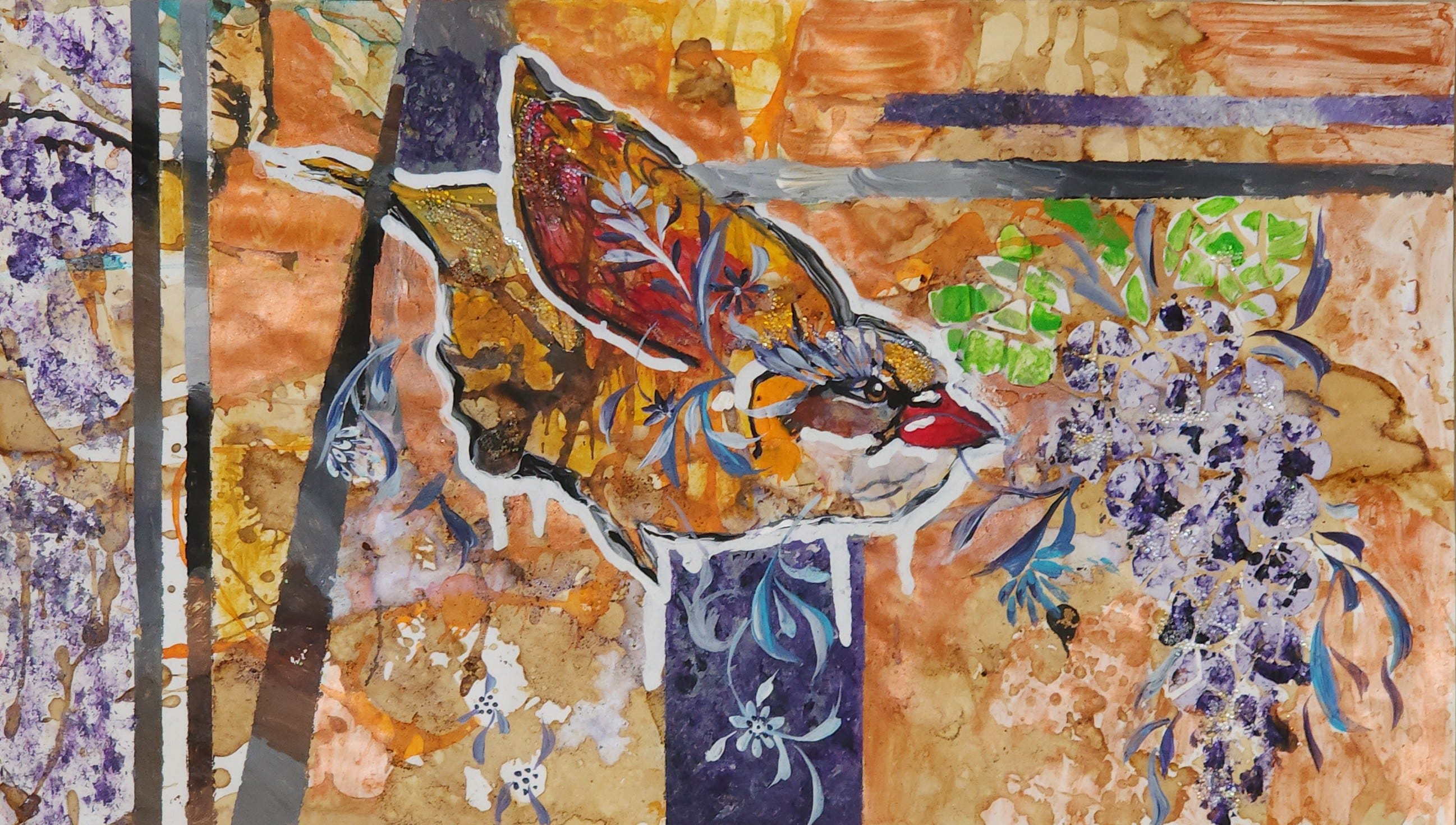
Zahra Zoghi (she/her) is a multidisciplinary artist based in Tehran with over three decades of experience. Her distinctive bird series fuses Persian art heritage with contemporary abstraction, reimagining traditional techniques for today’s world. Through intricate floral motifs, layered textures, and emotional mark-making, she explores themes of identity, memory, and transformation. Zahra’s work has appeared on the covers of Assignment Literary Magazine, LETTERS Journal, and Making Waves: A West Michigan Review, with additional features in Stoneboat, Welter, Ignatian Literary Magazine, Midway Journal, 7th-Circle Pyrite, Levitate, and Good Life Magazine. Holding a Master’s in Art Research, she exhibits internationally and mentors emerging artists.
The Wisteria Stare
Find More Of Zahra’s Work At:
Yuan Changming
Yuan Changming co-edits Poetry Pacific with Allen Yuan. Writing credits include 16 chapbooks, 12 Pushcart nominations for poetry and 3 for fiction besides appearances in Best of the Best Canadian Poetry (2008-17), BestNewPoemsOnline and 2129 other publications across 51 countries. A poetry judge for Canada's 44th National Magazine Awards, Yuan began writing and publishing fiction in 2022; his debut novel Detaching, 'silver romance' The Tuner and short story collection Flashbacks are all available at Amazon.
Chinese Lesson Continued: a Linguacultural Poem
Square-shaped, stroke-structured
Every Chinese character presents an
Abstract painting rich in symbolic
Meanings; for example, ‘自由’
[Freedom] is an enclosed framework
Where there’s always a unique stroke
Trying to break out of the cell
Whereas ‘牢笼’ [prison house] is
Open-ended in every direction, but
Even if you are as strong as a bull
Or a dragon, you can never hope to
Escape from under a simple radical
East vs West: an Essay on Cultural Differences
During the great flood
Noah hid himself in the ark
                                        While Dayu tried to contain it
                                        With his bare hands

Prometheus stole fire
From Olympian gods
                                        While Sui Ren got it
                                        By drilling wood hard

Smart Daedalus crafted wings
To fly away from his prison-tower
                                        While Old Fool removed the whole
                                        Mountain blocking his way

Helios enjoyed driving his chariot
All along in the sky
                                        While Kuafu chased the sun
                                        To take it down & tame it

Sisyphus rolls the boulder uphill
Because of his deceitfulness, while
Wu Gang cuts the laurel as a punishment
For distractions in learning
Khöömei
            [In this vast valley full of red dust, each
            sound is an echo of a protest or warning]

A deep double-
Throat, singing
From beyond
Heaven (or hell)
Echoing in nature
As it finds itself
            Heard in
A human space
Like a whale’s call
            Perceivable
By its like
Even afar across
A whole continent
I/我, U/你 & E/伊: a Modest Proposal
As classic Chinese suggests, we can
Reasonably attain linguistic equality
In English as long as we all agree
To use I, still for the first person singular
But U for the second, &
E for the third

All single-lettered
All capitalized
All sexes inclusive
Either case applicable, subject or object
& all equal in creation as
In speech acts

So, say after I:
I Love U
U love E
E loves us all
The Tuner: a 50-Word Trilogy
In our mid-teens
You gave me a tuner
In Mayuhe, which I’ve

Treasured as a love-token
For five decades (when
We remained totally
Lost to each other
On Earth’s opposite sides)
Until now, after a horizontal

Refreshment, you clarify
You’d just meant to help
Set the tune for my erhu

[Author's note: This poem is inspired by Qi Hong (祁红 )]
Find More Of Yuan’s Work At:
The Tuner: 16 most moreish days in a lifetime
Flashbacks: a collection of hyperrealistic narratives
Claudia Wysocky
Claudia Wysocky is a 16-year-old Polish poet based in New York, celebrated for her evocative creations that capture life's essence through emotional depth and rich imagery. With over five years of experience in fiction writing, her poetry has appeared in various local newspapers and literary magazines. Wysocky believes in the transformative power of art and views writing as a vital force that inspires her daily. Her works blend personal reflections with universal themes, making them relatable to a broad audience. Actively engaging with her community on social media, she fosters a shared passion for poetry and creative expression.
Finding My Way Back: A Journey Through Anorexia
I beheld a stranger in the cracked mirror that once doubled as my best friend and worst enemy. Thin, sunken cheeks stared back at me, hollowed out by anorexia's relentless grip. My ribs jutted out like a macabre xylophone, each bone a discordant note in the song of my life. I hated who I'd become, yet I couldn't let her go. Anorexia had me in her clutches, and she wasn't about to let me
go without a fight.

The first time I ever starved myself, I was 15. It was the fall of my sophomore year, and puberty had painted my body with a cruel brush. My once-slim frame had rounded, and the boys' once-admiring glances had turned to leers. One day, my English teacher pulled me aside after class and slipped a dieting pamphlet into my notebook. "For your good," she said, her eyes filled with concern. But her words lingered like a poisonous seed, taking root in my vulnerable mind.

At first, I just cut out desserts, then carbs, and then entire meals. I became an expert at hiding my secret behind nonchalant excuses: "Oh, I'm not hungry," or "I already ate." My parents didn't suspect a thing; they were too preoccupied with their battles as immigrants trying to make it in a foreign land. And so, I slipped further down the rabbit hole of starvation, drawn to its false promises of control and beauty.

My poetry and photography became my only solace, the only places where I could express the maelstrom of emotions raging inside me. I found solace in the dark and emaciated portraits of models like myself, girls who looked like modern-day saints, their gaunt frames adorned with halos of bones. They were my unhealthy inspiration, and I yearned to be just like them. In my mind, their skeletal frames represented the epitome of beauty and control.

The more I starved myself, the more I withdrew into my world. My grades plummeted, and my once-vibrant social life shriveled up like a raisin in the desert sun. Family dinners turned into silent battles, with each morsel of food a battleground upon which my parents waged war against my emaciated willpower. "You're wasting away," my mother sobbed one night, her accent thick with fear. But I couldn't hear her over the deafening voice of anorexia in my head, which told me that no matter how much I starved myself, it would never be enough.

I continued to slip further away from reality until that fateful day when my camera and pen, once my loyal companions, turned their backs on me. My photographs were lifeless, devoid of the emotion and depth I'd once poured into them. My poems echoed with the hollow laughter of a girl I no longer recognized. In a desperate attempt to recapture the girl I'd once been, I reread my old work, hoping to find a glimmer of the passionate young woman who once breathed life into the world around her. Instead, all I found were the ramblings of a girl consumed by self-hatred
and anorexia's lies.

It was then that I decided to let go–to let go of the false image I'd been chasing and embrace the woman my parents had raised me to be. A woman who was smart, talented, and beautiful, despite what the mirror told her. But it wasn’t so easy, and still isn’t easy to this day. The journey back to myself was long and arduous, paved with setbacks and relapses. But with the support of my loving father, understanding counselor, and a nutritionist who understood my cultural background, I took baby steps towards recovery.

"Klaudia, moja droga," my father would say as he embraced me one evening after yet another therapy session. "You are so much more than what you see in that glass. Your beauty radiates from within, from your kind heart and creative soul." His words were like balm to my fractured spirit, reminding me that outer beauty was only skin deep. But I felt nothing, because what was I supposed to feel if he never said that to me? All he did was yell... Criticize me more, saying that I was the reason why we had it so tough. I couldn't take it anymore. After arguing with my father
for hours on end, he left me and isolated himself. He was overwhelmed and probably needed a breather. I sought solace in my old habits, lunging for the wafers in our cupboard. My hand trembled as I devoured the whole pack while staring at myself in the mirror. Anorexia's grip tightened its hold on me, luring me back into its cold embrace.

Weeks passed by like a blur of sleepless nights and bingeing followed by purging. The vicious cycle continued until one day, while rummaging through our family photo albums, I stumbled upon a picture of me at my Confirmation; plump cheeks, bright eyes, and a smile that could light up the world. My mother had taken that photo just moments before we left Poland. The contrast between the radiant girl in the picture and the hollow-eyed stranger staring back at me now was jarring. I realize...was this even worth it?
Maxwell O’Toole
Maxwell O’Toole (he/him) compulsively turns everything into art. He is currently pursuing his writing career, as well as post-graduate studies in Psychology, while living with his partner and cats in St. Catharines. His muse comes in fire, music, nature, and lived experiences (both mundane and unique). When not writing, Maxwell can be found playing video games, drawing, singing, sleeping, or voraciously reading. If you want information about his work, visit @maxwellwriteswell on Instagram or subscribe to his Substack publication ‘Well’. Both, and more, can be found at bit.ly/maxwellwriteswell.
Metamorphic
I

Before, I was fine-
grained shale, all smooth silt and clay

naissance unmarred,
homogenous
laminate layers weak,
easily split everywhere
I was touched
by chisel or gentle caress,
this first formation transforming
striations across muscles, stretch marks
spanning me miles.

II

Despite my suffocation,
the oppressive pressure
has no plans to let up;
nature didn’t care
if I had no fingernails
to exhume myself, dust off the facade
like wiping chalk off slate
shining dull, disingenuous
as dollar store plastic peonies
bundled by twist-tie.

III

It was evening when I first noticed
I was reflective, just briefly,
a mirage or fading dream
lenticular in my mirror
looking phyllite, bleached-bone-white
mica flakes foliating
into lustrous leaves, growing —
finally, finally — I felt myself interlocking
under the shrinking weight,
the three-hundred-degree heat,
the granular solidifying,
sliding into proper alignment.

IV
Then, I’m awake
and my platy minerals keep
sparkling, shimmering
under lights and lenses,
but I fear you still clearly see
all these new parts of me —
the not-quite-there-yets —
like fool’s gold, fake granite
when I keep emerging stronger,

no longer living always split-
ting along plains of weakness;

I am stuck between
my schistosity and my hope
for growth and repair,
a sentient, self-conscious,
crudely-lacquered kintsugi.

V

If you passed me at the muddy river bank
all those years ago, you wouldn’t recognize me
now — I watch as your eyes scan or twitch
as you’re trying to recall

a distant memory, some similar sediment-core
you once knew, but coming up empty —
I’m not sure if I would either (thank God);
neither of us thought I’d become
gniess, return anew to those old
small-town stores, patchy parks, and cafe counters,

but I am, broad crystalized bands hard-
won, blinding, unbreakable.
K.m. Lee
The author of these poems goes by the pen name k.m. Lee and they've been writing poetry for about ten years. Their life had been one traumatic event after another while also being poured on by love. They try to write their poems in a way that makes it personal to themselves, while also allowing anyone reading to still be able to find a way to relate and connect to their words and give it their own meaning. They hope you find refuge in their writing, as they strive for nothing less than their entire soul on their pages.
[Content Warning: sexual assault, rape, guilt, hospitals, blood, death, and trauma.]
In this universe... There is life and there is love. Everything, everywhere is one or the other, and on special occasions both simultaneously. But nothing is ever neither. Some life can go unseen and love unfelt. But regardless it is there. Occasionally individually existing for itself while also inevitably co-existing to evolve something else. People always say you'll never die alone. Which I believe to be true. Because even in the middle of a forest my death will be felt by moss and earth, and witnessed by bugs and animals. All living. All loving the food I now bring them. Grateful for the nutrients I supply. And for me I will be home once again. Sunk deep into the earth wrapped up in the roots of the trees around my grave, surrounded by life and love for eternity. How could I not feel grateful for such a blessing as that.
<The Living Root of Love>
Sweet dream memories like 6 years brought forward, unto creatures crawling beneath lift fingers of black and mare. Gripping wood knots and grain like looped rope, and whispering lullabies of distant baleful opportunity. Coarse hums echoing lies caught in throats of changelings and mimics... While yesterday drowns in the sorrow of hope for tomorrow. The canine of the shadow in the corner glistens in the faint glow of the superman night light. Childhood fears rushing back like the swift drip of saline. Hitched breathing then leads to silent anxiety. Am I the only one who sees the monster at the end of my bed? Or the vampire drawing my blood?
< When Memory Grows Teeth >
Not everything can be mended by seams of gold. Shattered porcelain may lay on the hardwood, but broken hearts mourning life or death don’t fall like autumn leaves when brushed softly by the breeze. Shadows follow, walking slowly behind, stepping on heels so as not to let you free. It’s easy to be quiet in the blue. A numbing memory. A time before… Experiencing. Understanding. Damage and suffering. Learning to be stronger. There are still pieces on the floor and there are still cracks that gold will never fill. But we are not porcelain nor delicate China. We fall apart like atoms before the universe. To create something more beautiful and enrapturing. Something yesterday yearned to feel.
<Kintsukuroi>
Some days in the bitter cold, I miss your soft winter fire. Mid January embers. A gentle passion from 8 years yearning. I miss when I was your best friend. I miss when I was important to you. When your heart longed to keep me safe. Hand on my back, walking through crowded streets. Your arms wrapped 5 times around me when I was cold. You asked me to run out in the rain. And to play on the playground. You'd pick flowers for me. A comforting childlike love. After all... We were only 10 when you first told me you liked me. I kept that note 8 years, tucked away in a special box to keep it safe. I rarely touched it, so it would hold its original value. Not that it was worth anything to anyone but me. 8 years later, I'm texting you from the top of a bunk bed at five in the morning, while you're only two rooms over, when you decide to tell me you still love me, and you always have. How quick I was to believe you. How foolish and juvenile of me. Because mere months later, you broke my heart in ways I never could imagine. Someone I had always been able to trust more than anyone was now the sole cause of my suffering. I could never possibly trust you again. How could I? How could you so easily expect I should? Were you so oblivious to your own destruction? I was no longer safe with you, and you made that clear, yet you expected that things would be normal so soon after? Where was your head? More so, where was your heart? Could you no longer see the little 10-year-old girl you first fell in love with? Rather, just a body and a moment? 8 years of longing desire for a simple feigned "love".
<8 Years>
Sometimes I wonder if you were ever really here. There's very little trace of you. Only my dirty clothes in the basket. Only my dishes in the sink. Only my shows playing on the TV. Only my shoes waiting by the door. I sometimes wonder if maybe I longed for you so deeply that my brain fostered this idea, or concept of you actually being here and what our life would be like. One moment we're lying in bed and I'm pushing your hair back to see your gentle green eyes, and starry freckled face, and the next I wake up alone, cold and sad. Perhaps it really was all just a dream? I may believe that if it weren't for the few photos I got of our short time together, or the toothbrush in my bathroom.
<Love’s Afterimage>
Find More Of K.m. Lee’s Work At:
Alice Baburek
Alice Baburek is an avid reader, determined writer and animal lover. She lives with her wife and four canine companions. Retired, she challenges herself to become an unforgettable emerging voice.
Shadows of Silence
The parking lot was empty. Estelle Lancer studied her cell phone as she stepped outside. It was 3 p.m., and there was no service. She looked up to find her vehicle, but to her amazement, there were no cars—not one. The concrete area was overgrown with weeds. Dark clouds hovered above. Did she come out of the wrong exit?
The confused older woman turned back to the mall. The doors were covered with boards, and dirt and debris scattered the ground. “What the…” she mumbled to no one but herself.
Estelle’s heart skipped a beat. Again, she tried to use her cell phone. No service. Instinctively, she pulled on the boarded door. Locked. She gasped for air. Her skin was clammy. For a brief moment, she thought she might pass out. Estelle leaned forward. She closed her eyes. Deep breaths. This has to be a dream!
Slowly, she opened her eyes. But nothing had changed. The calm wind made her shiver. There must be a rational explanation. Without hesitation, she hurried along the building. As she rounded the corner, another overgrown empty lot emerged.
How was this possible? Where were all the people? Where were the cars? Her mind swirled.
“Hello? Can anyone hear me?” she shouted with a shaky voice. Nothing. Complete silence. Estelle shuddered. She was alone.
The length of the building seemed endless. Finally, she reached the front of the abandoned mall. And much to her disbelief, it looked the same. Boarded doors and an empty lot.
She looked away, searching for a connection to the real world. Fields of wavy grass and clusters of trees. No other buildings in sight. Where was the road?
Her throat tightened. Once again, with a shaky hand, she checked her cell phone. No service. How was any of this possible? If she could wake up, everything would be fine.
Estelle raced to one of the locked doors. She yanked and pulled with all her strength. Maybe if she could get inside…Her thoughts stopped. What if the inside was the same as the outside?
After wrenching the rusted door, it finally broke loose. Using her back to push it open, the smell of dank, musty air permeated her lungs, making her choke. It was dark inside the desolate mall. Quickly, she used the light from her phone.
Litter and rubble spewed across the aged tile floor. “Hello! Anyone here?” yelled Estelle. “Please…I need help…anyone here?” Her strained voice echoed back. She flashed the light in front of her. Empty. The storefronts are dingy. The broken-down escalator spiraled into darkness.
How can this be? Estelle checked her phone. Still, 3 p.m. A skewed sense of time. Was it possible she could be dead? She did not believe in the afterlife. Her shoulders slumped. A tightness in her chest. A tenseness in her stomach. She held back a scream of defeat. The weakness in her legs and knees spread to her limbs. Her body quivered.
The fading light dissipated. Her vacant eyes stared into the void of emptiness. The unknown beckoned Estelle as the shadows slipped in, taking hold of her tormented soul.
***
The two female paramedics gently pulled the white sheet and covered the body. One of the emergency technicians offered a quick prayer. They loaded the gurney into the back of the ambulance. Minutes later, with flashing lights, the silent ambulance slowly drove away from the mall’s empty parking lot.
Bill Wolak
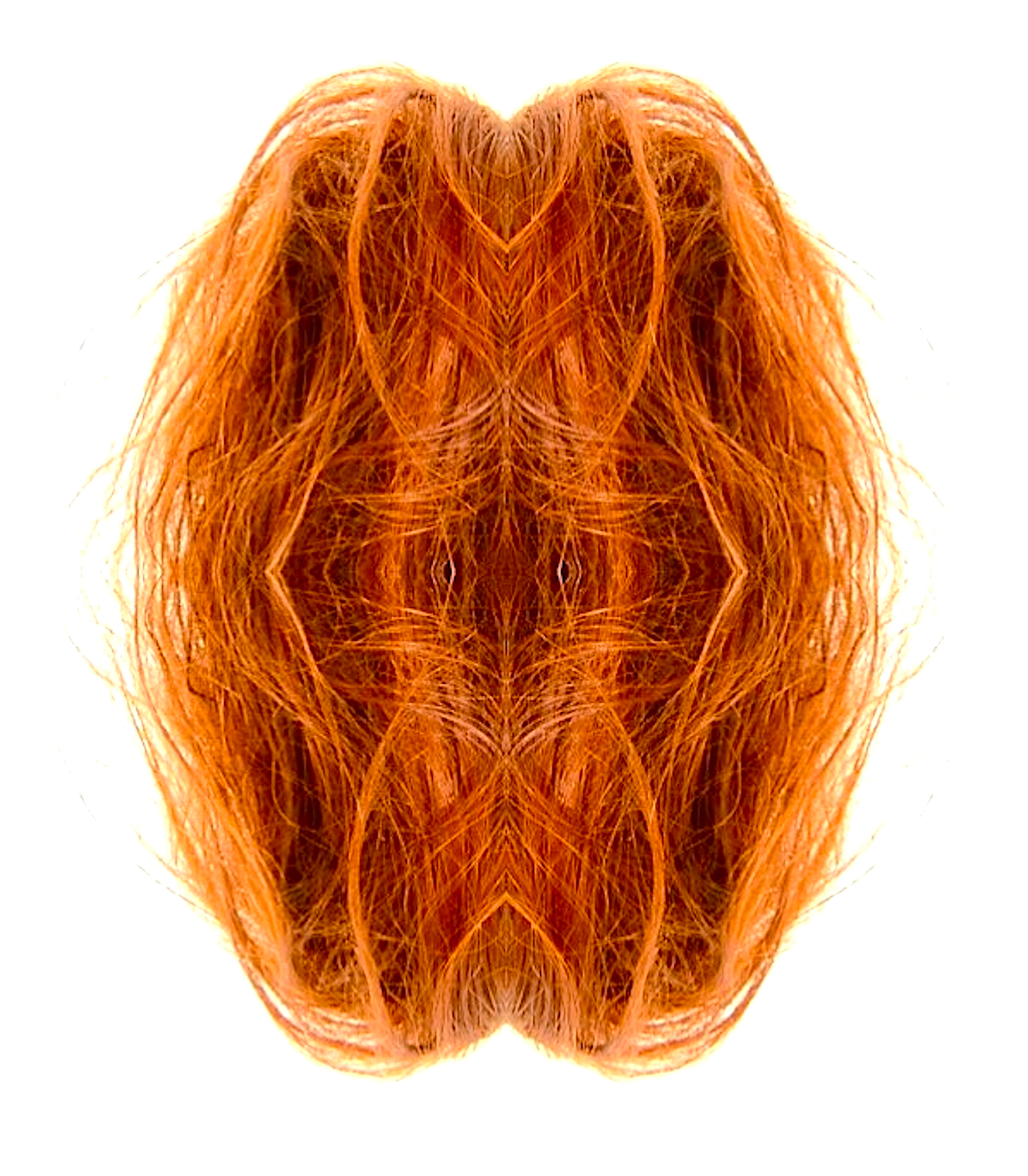
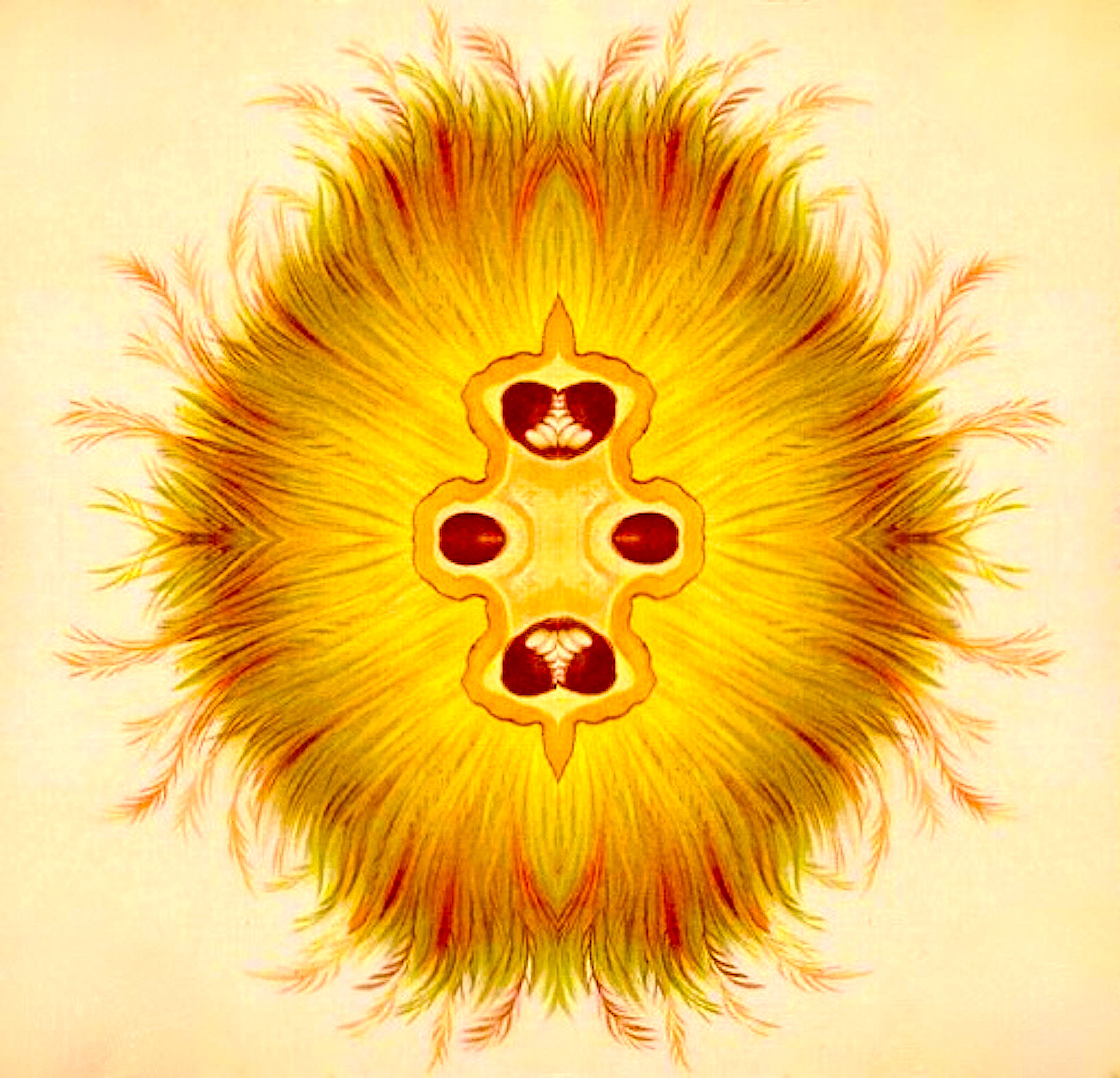
Bill Wolak has just published his eighteenth book of poetry entitled All the Wind’s Unfinished Kisses with Ekstasis Editions. His collages and photographs have appeared as cover art for such magazines as Phoebe, The Passionfruit Review, Inside Voice, and Barfly Poetry Magazine.
Seeking Only Abandon
Without the Shelter of Tenderness
Marina Kuzmić Laszlo
Marina Kuzmić Laszlo is a writer, translator, and editor based in Zagreb, Croatia. She writes poetry, vignettes, and short fiction in Croatian and English. Her work has appeared on various literary websites, and she has been a finalist in several literary competitions. Her first poetry collection was published in 2023. She also served as editor of the popular regional literary blog Čovjek-časopis. She makes virtual literary badges on Instagram using bits from regional poetry by strong women.
COUNTRYSIDE
Where we dwell, where our days unfold within a life
Etched from a promise the universe once made
There is a huge bedroom no one feels trapped in
Morning sun waking our ageless bodies in lightness
There is a table with two chairs on a small terrace
Two mugs with fresh coffee, one large kiss, warmed
An ashtray for you, for me scented candles
A long-deserved space to burn what needs to be burnt
And enjoy freely what needs to be consumed
DEFEAT
The circle has closed and it seems that perhaps it went around in vain.
Once again, there is no one to confide your stupidest and most harmful daily mistakes.
Captivity has squeezed you from the inside, and its familiarity is of no help—it only defeats.
You have learned nothing in this world in all these years, neither about yourself nor about others.
You go back to yelling, fighting, insults; you are all one huge regression, one giant despair.
You are losing all layers of civilization, you are a bully, you are so unworthy
of everything and everyone you have, you are nothing all over again,
you are ungood, you cannot even cry about it, that does not amnesty you either,
you are a crime, you are perhaps
a normal human person.
HABITAT
It was never autoimmune, yet still I always
blame my own body—physically, mentally,
emotionally, athletically, creatively, recreationally—
for inadequate levels of resistance,
too high, too low, irrelevant.

I fight with all my heart, I stand to protect,
unimaginable the strength of my immunity,
natural and acquired—yet harsh words,
deftly clustered like grapes, conquer,
one by one, working retroactively, poison
with delayed effect, absorption
sudden and lasting.

My body is a temple, and I cannot abandon it,
where else, in what other,
shall I dwell, pray, weep bitterly,
sing loudly, solemnly—
spread my colourful merchandise,
roll my blue eyes at the statements of the Pharisees?

Escape is not an option, time is running out,
I need to find a better way,
a mode for more comfortable dwelling,
an unforgettable experience,
value for money.
Cameron Sauder
Cameron Sauder (he/him) is an avid lover of stories, writing, and all things fantastic. Born and raised in Barrie, Ontario, he's studied English and Creative Writing at Brock University since 2021, where he co-led the school's creative writing club and co-launched a small literary journal: Phylum Press. He's received an honourable mention in L. Ron Hubbard's Writers of the Future Contest, and his short story, “Isolation,” was published in Blood Moon Rising magazine in October 2024.
I is not enough
to portray the effervescent
multitudes of myself.
I can only contain echoes of
inner realities; legion
joys, fears and selves
stripped down to naked
singleness, a speck of dust
on a fractured mirror.
I is not enough.

I is but a host of lies,
wax and brine, that I tells I.
I is to myself a single shining
star in a gradient sky, pink
and blue peppered with
glistening gems and latent
dreams. I is veiled dystopia,
feigning unity in a realm
defined by fragmentation.
Asking what is, who is I
is snapping life with a
shuttered lens. Does I
matter in cosmic breadth
when I is not enough?
Glass Tower
Dream with me, think of eternity
in my arms. Sink your spade into
the earth, I’ll heat mirrors into
frozen bricks; plinking and syncing
together, a glass tower for two.

Let’s build it up, fuse the glass
with layered zinc and a touch of
kink, construct this spire up to
the brink of a cosmic sphere,
a pink sky at night haloed around
your smile. Insert the telescope,
brass and copper, and gaze up
at infinity with me.

This galaxy is ours, stars floating
like glitter in a cocktail, Granny
Smith puckering lemons with a grin,
our own Sour Milky Way. Clink
your glass to mine, and drink the
cosmos through our eyes, seeing
ourselves reflected up there, so high.

Our apotheosis awaits us with open
arms; Scorpio’s venomous touch a
poison of passion, like wine on an
empty stomach; the centaur’s pointed
arrow laced with buzzing ecstasy.

Fall into my arms and step onto
a star, floating up into the heavens
as Ouranos and Gaea embrace to
live forever among the blazing lights.
Witchy Woman
Witchy woman cast a spell upon me,
her enchanting lips pressed against my own.
She whispered to me a witchy story,
that sent ecstatic chills throughout these bones.
In her own house, she grew toxic foxglove
from seeds found deep in the wildest forest.
She made a spell to conjure one’s true love,
mixing oils to keep the potion nourished.
Her black cat slunk beneath her outstretched hand
as with the other, she placed the mixture
on my tongue. It worked just as she had planned;
I fell in love, perfect like a picture.
            “How’s that for a tale?” as I grab her hips.
She laughs, kissing the story off my lips.Find More Of Cameron’s Work At:
Phylum Press (Which Cameron Co-Edits)
Thank you for reading Riposte, Balestra’s Fourth Edition! This marks the first full year of Balestra and what an incredible year it’s been. Riposte is a beautiful edition to cap off this first chapter of Balestra. Each and everyone of our contributors offers a unique and fascinating perspective and the mix of disciplines is what keeps Balestra so exciting. As always, we can’t thank our contributors, submitters, and readers enough. Without all of you this project wouldn’t be possible. Which brings us to a new project. Balestra will be releasing a print anthology! In the next couple of months we’ll work to assemble all the works from our first year of editions and compile them into one incredible book.
Once again, thank you for being part of Balestra. Comment about your favourite piece from this edition, share Balestra with your friends and family, and please consider subscribing for more. If you’re a particularly dedicated Balestra fan you should also check out our newly launched merch store, with some custom made Balestra themed designs.
Wishing you all the best,
The Balestra Team